Stopping Sewer Disasters With Basic Maintenance
Underground sewer pipes get forgotten about all the time. They sit way under your grass where nobody looks. Most folks never even check their main line until a toilet overflows or nasty wastewater comes back up the tub drain. But waiting for dirty water to flood your floor is a huge mistake. A backup turns what could have been a quick plumbing fix into an expensive mess in no time.
Steady sewer line maintenance keeps those repair bills way down, and it saves your house from awful water damage. Here is a look at what actually clogs main sewer pipes, the red flags you should watch for, and how a simple sewer line maintenance routine keeps everything moving the way it should.
What This Guide Covers
- Why do sewer lines block up?
- 7 warning signs your sewer line is clogging
- Sewer line leaks vs standard plumbing leaks
- Sewer line maintenance basics that prevent backups
- A simple sewer line maintenance schedule
- What never goes down a Sacramento drain
- When sewer line maintenance turns into sewer line repair
- Sewer line maintenance questions Sacramento homeowners ask
Why Do Sewer Lines Block Up?
Mainly, sewer pipes get clogged for two big reasons. Either bad habits send stuff down drains that shouldn’t go there, or nature messes with the pipes from the outside.
Flushing the wrong things is usually the biggest issue. Stuff like wipes, paper towels, and hygiene products just do not dissolve in water like normal toilet paper does. They catch onto pipe edges. Then they trap hair, soap scum, and waste until water simply can’t pass through anymore.
Pouring hot grease down the kitchen sink is another huge mistake. Hot oil seems thin when it’s in the pan, but it turns solid fast once it hits cold pipes underground. It sticks to the walls and catches every bit of dirt passing by. Grease is the most common reason a main line needs emergency clearing instead of routine sewer line maintenance.
Outside in the yard, tree roots cause massive trouble. Roots naturally reach for wet dirt. If your main pipe has even a tiny hairline crack, roots force their way inside. Once they get in, they grow fast and block everything trying to flow through. Older Sacramento neighborhoods with big shade trees deal with this constantly, which is why root checks belong in any sewer line maintenance plan.
Pipe age matters too. Clay and cast iron lines installed decades ago crack and separate at the joints as the ground shifts. A camera check is the only way to spot that kind of damage before it turns into a full blockage.
7 Warning Signs Your Sewer Line Is Clogging
A main sewer line doesn’t just block up out of nowhere. It gives you warnings first. Catch any of these seven and you are still in sewer line maintenance territory instead of emergency repair territory.
- Slow drains all over the house. One slow sink just means a small clog under that specific drain. But if your shower, kitchen sink, and toilets are all running slow at the same time, the main line under your yard is backed up.
- Gurgling from toilets and floor drains. That sound is trapped air struggling to push past a blockage. It usually shows up days or weeks before water actually backs up.
- Sewer smell indoors. Trapped wastewater makes foul sewer gas creep right back up into your living room through the nearest floor drain.
- Water backing into the tub when you flush. If dirty water bubbles up into your bathtub when the toilet flushes, turn off your main water valve right away. That means the pipe is totally blocked and wastewater has nowhere else to go.
- A toilet that empties itself. A water level dropping on its own points to a venting or blockage problem further down the main line.
- Patches of grass that grow faster than the rest. Leaking wastewater fertilizes the lawn directly above the break.
- Soggy spots or sinking concrete. Standing wastewater washes out the soil under driveways and walkways until they crack and settle.
Two or three of these at the same time means the main line, not a single fixture, is the problem. That is the point where sewer line maintenance stops being optional.
Sewer Line Leaks vs Standard Plumbing Leaks
A broken clean water line creates a mess, sure, but a leaking sewer line is way worse. Sewer leaks spill dirty wastewater full of nasty bacteria right into the ground around your home.
When a sewer pipe cracks under the yard, extra green patches of grass usually pop up along where the pipe runs. You might also notice soggy, smelly mud spots on your lawn even when it hasn’t rained in days. That standing wastewater ends up attracting bugs and rodents fast.
Around Sacramento, we have really heavy clay soil that shifts around. Leaking sewer water washes away dirt under concrete, which ends up making driveways or walkways crack and sink. A clean water leak wastes water and pushes your bill up. A sewer leak damages the ground your house sits on, and that is a different level of problem entirely.
Sewer Line Maintenance Basics That Prevent Backups
Catching small pipe issues early is the only real way to avoid a huge disaster. Solid sewer line maintenance comes down to three things: looking inside the pipe, clearing it before it clogs, and keeping the wrong material out of it.
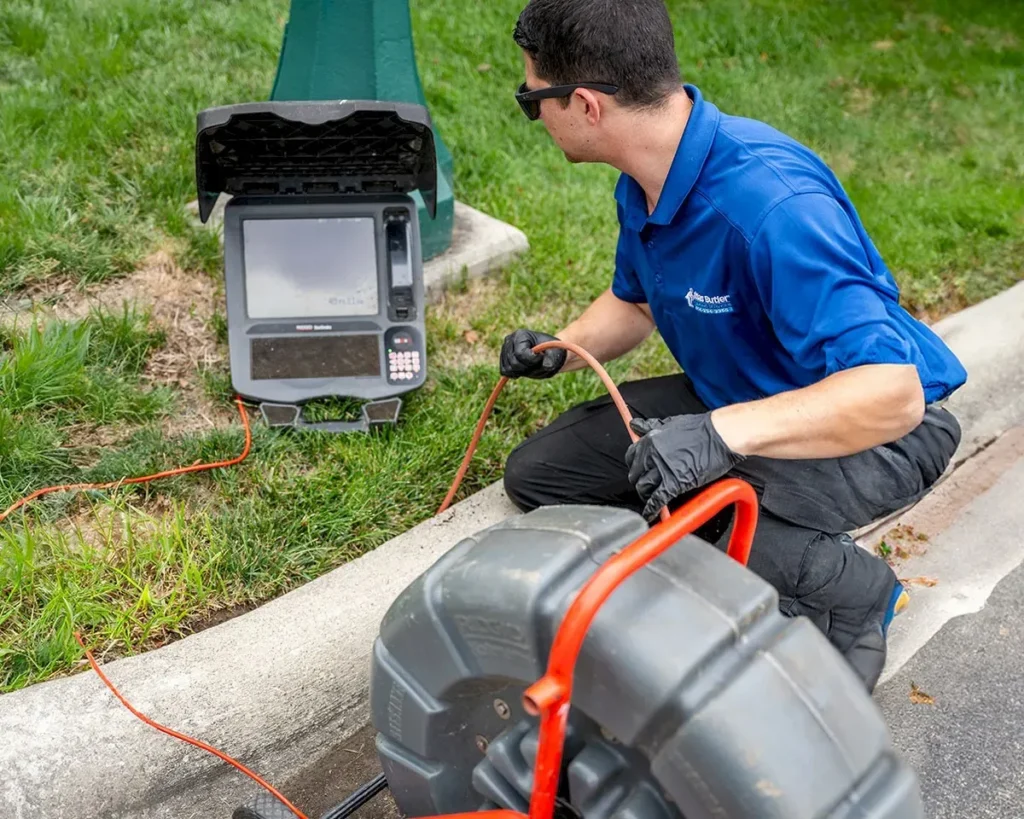
A plumber can send a small camera down a flexible cable straight into your main line. That lets you see what the inside of your pipes looks like on a monitor screen without digging up the yard. If roots or grease are starting to build up, you can clean them out before the pipe gets fully blocked.
Regular drain cleanings clear out years of built-up sludge so your main line stays open year after year. A cable machine cuts through roots and hard blockages. Hydro jetting goes further and scours the pipe walls back down to bare material, which is what you want when grease has been building up for a long time.
The third piece is the one homeowners skip. Strainers in every sink and shower, a grease can next to the stove, and a household rule that only toilet paper goes in the toilet will do more for your main line than any tool a plumber brings.
A Simple Sewer Line Maintenance Schedule
You don’t need a complicated plan. A rough rhythm is enough to keep a main line healthy.
Every month: pull and rinse your sink and shower strainers, then flush each rarely used drain with hot water so the trap doesn’t dry out and let gas in.
Once each season: walk the line of your yard where the sewer pipe runs and look for soft ground, sunken spots, or grass growing noticeably faster. Spring is the worst season for roots, because that is when they chase moisture hardest.
Once a year: have the main line cleaned if your home has mature trees, older clay pipe, or a history of backups. Homes without those risk factors can usually stretch the interval out further.
Every few years, or before you buy a house: get a camera inspection. It is the only sewer line maintenance step that tells you the actual condition of the pipe instead of just clearing what sits inside it. It is also the step that catches a cracked joint while it is still a small repair.
Write down what the plumber finds each time. A record of how fast roots come back tells you whether yearly cleaning is enough or whether the pipe itself needs work.
What Never Goes Down a Sacramento Drain
Most main line blockages trace back to a short list of items. Keeping them out of your pipes is the easiest sewer line maintenance you will ever do.
- Wipes of any kind, including the ones labeled flushable. They hold together in water and snag on every rough spot in the pipe.
- Cooking grease, oil, and bacon fat. Pour it into a can, let it set, and throw it out.
- Coffee grounds and eggshells. They sink and pack down into a layer that catches everything else.
- Paper towels, cotton pads, and dental floss. None of them break down the way toilet paper does.
- Cat litter, stucco rinse water, and joint compound. All three set up like cement inside a pipe.
- Harsh chemical drain openers used over and over. They eat at older pipe walls and rarely clear a main line blockage anyway.
When Sewer Line Maintenance Turns Into Sewer Line Repair
Cleaning solves a blockage. It does not fix a broken pipe. A few findings move you from maintenance into repair.
Roots coming back within months of a cleaning means they have an opening to get through, and that opening only gets bigger. A camera showing a belly, where the pipe has sagged and holds standing water, means solids will keep collecting in that dip no matter how often the line is cleared. Separated joints, crushed sections, and cracked clay all need the pipe repaired or replaced rather than cleaned again.
The good news is that repair no longer means tearing up the whole yard. Trenchless methods let a crew rehabilitate or replace a run of pipe through small access points, so your driveway and lawn mostly stay where they are. The EPA’s water infrastructure guidance makes the same point utilities have known for years: dealing with a line before it fails causes far less disruption than dealing with it after.
Either way, the decision comes from the camera, not from guesswork. That is why inspection sits at the center of every sensible sewer line maintenance plan.
Sewer Line Maintenance Questions Sacramento Homeowners Ask
How often does a main sewer line actually need cleaning?
It depends on what is around the pipe. A home with mature trees, clay pipe, or a past backup usually does best on a yearly clearing. A newer home on plastic pipe with no tree cover can often go several years between cleanings. The pattern in your own yard matters more than any general rule, which is why keeping a record of each visit is worth the trouble.
Can I keep my sewer line clear with store-bought products?
Not really. Chemical openers are made for a hair clog in a bathroom sink, not for a blockage sitting forty feet out under the lawn. They rarely reach that far, and repeated use eats away at older pipe walls. Enzyme treatments are gentler and can slow grease buildup, but they do not cut roots and they do not replace a mechanical clearing.
Does the city handle any part of my sewer line?
The public main in the street is the city’s responsibility. The lateral running from your house out to that main belongs to you, and that lateral is where most blockages and root intrusions happen. So the section that needs the attention is almost always the section you own.
How long does a camera inspection take?
Most take under an hour for a standard single-family lateral. The camera feeds video back in real time, so you see roots, grease, sags, and cracked joints on the screen as the cable travels. That footage is what turns a guess into an actual plan.
What is the difference between snaking and hydro jetting?
A snake, or cable machine, punches through a blockage and cuts roots so flow returns. Hydro jetting uses high-pressure water to scour the full inside surface of the pipe, taking off the grease and sludge layer a cable leaves behind. Snaking restores flow. Jetting restores the pipe’s actual capacity, and it is the better choice when grease has been building for years.
How Appoint Plumber Today Handles Sewer Line Maintenance
When sewer problems pop up, you need a local crew that gets there quick.
Appoint Plumber Today helps homeowners all over Sacramento, CA keep their main sewer lines clear and flowing. Whether you are dealing with stubborn tree roots, slow drains, or a total line backup, our team brings the right tools to get it sorted. We use video camera checks and modern pipe repair methods, so we don’t have to tear up your entire lawn or driveway to reach the problem.
- 24/7 Instant Response — a real person answers the phone, whatever the hour.
- On the Way in 30 to 60 Minutes — no sitting around waiting all day.
- No Call-Backs Needed — address, fault, and arrival window all confirmed on the first call.
- Scope Explained First — you hear exactly what the work involves before anything starts.
Noticed slow drains or heard gurgling in your plumbing? Call Appoint Plumber Today and get your sewer line maintenance check on the books.


Latest Post