
A drip you shrug off in March has a way of becoming a wall-opening repair by July.
Most plumbing trouble doesn’t kick the door in. It creeps. A soft stain under the vanity, a toilet that refills itself at 3 a.m., a faint sour smell near the water heater that you keep meaning to look at.
Every one of those is easy to shrug off. Give it three weeks and you’re pulling up baseboards. The gap between a $180 service call and a $2,000 repair usually comes down to knowing when to call a plumber, and knowing what to do in the twenty minutes before one pulls up.
What This Guide Covers
- 6 signs it is time to call a plumber
- What to Do Before Your Plumber Arrives?
- 4 Bad Habits That Slowly Destroy Your Pipes
- Understanding How Your Home's Plumbing Actually Works
- When to Call a Plumber Immediately
- How Plumbers Clear Deep, Stubborn Drain Clogs
- Simple Preventative Steps You Can Take Today
- Local Plumbing Services in Sacramento, CA
- When to Call a Plumber: Questions Homeowners Ask
- Need Help With a Plumbing Issue in Sacramento?
6 Signs It Is Time to Call a Plumber
Most of these start small enough to ignore for a week or two. That is exactly why they are worth knowing, because each one gets worse the longer it sits.
- Water pressure drops across the whole house. One weak showerhead is a clogged aerator. Every fixture losing pressure at once points at the supply line, and that is a reason to call a plumber rather than start unscrewing things.
- Every drain slows down together. A single slow sink is local. Sinks, tubs, and toilets all draining slowly at the same time means the main line is restricted.
- A stain that keeps coming back. Paint that bubbles again after you dry it out, or a ceiling ring that darkens week by week, means water is still moving behind the surface.
- The meter moves with everything shut off. Close every tap, watch the leak dial, and if it still creeps you have a hidden leak somewhere in the system. Call a plumber before it finds your subfloor.
- Sewer smell indoors. A dry trap explains a faint smell in a guest bathroom. A sewer odor that will not go away anywhere else usually means a venting fault or a break in the drain line.
- No hot water, or hot water that quits early. Sediment, a failing element, or a bad thermostat all show up this way. Any burning smell or rumbling from the tank turns this from a repair you schedule into a reason to call a plumber today.
Knowing when to call a plumber is really just knowing which problems spread. Anything involving pressure, the main line, or water you cannot see belongs in that group.
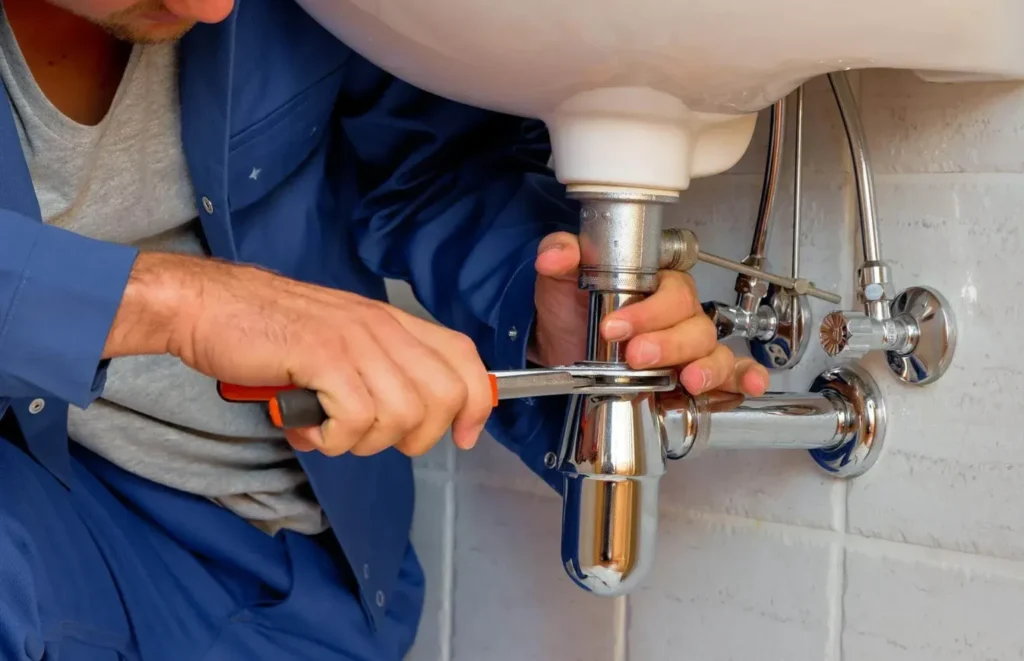
What to Do Before Your Plumber Arrives?
Water is spreading across your kitchen floor and the truck is still fifteen minutes out. What you do right now decides how much of that flooring survives.
1. Shut Off the Water Main Right Now
Find the main shut-off valve and turn it clockwise until it stops. Don’t half-close it. Shut it all the way.
One warning before you wade in. If that water has reached outlets, power strips, or the breaker panel, stay out of it. Go to the panel and kill the circuit for that room first. Subfloor is replaceable. You aren’t.
Once the water is off, protect the water heater too. A tank that keeps firing while it sits empty will burn out its own element.
- Gas units: turn the thermostat dial down to Pilot.
- Electric units: flip the dedicated breaker straight to Off.
2. Put Away the Chemical Drain Cleaners
Put the bottle down. Those cleaners don’t really dissolve a clog, they sit on top of it. And while they sit there, the caustic stuff goes to work on your pipe wall instead.
There’s a safety side to it as well. When the plumber opens that trap, whatever you poured in comes right back out, sometimes onto their hands or face. If you already used some, say so before they start.
3. Clear Out the Work Area
Empty the cabinet under the sink. Boxes, buckets, half-used bottles of cleaner, all of it out on the floor somewhere else.
Then open a straight path from your front door to the problem. Drain machines and pipe wrenches are heavy, and every trip around your laundry basket shows up on the invoice.
4. Snap a Few Quick Photos
Before anyone starts mopping, get your phone out. Shoot the standing water, the sagging ceiling, and the buckled flooring from a few angles.
Write down when you first noticed it, too. Adjusters ask that question every single time, and a real timestamp beats a shrug.
5. Clear Outdoor Paths and Access Points
If this is all happening in the middle of a downpour, go find your sewer cleanout cap outside and clear the wet leaves, mud, and garden clutter off it.
That cap is how the crew reaches your main yard line. Nobody wants to hunt for it under a wheelbarrow at nine at night.
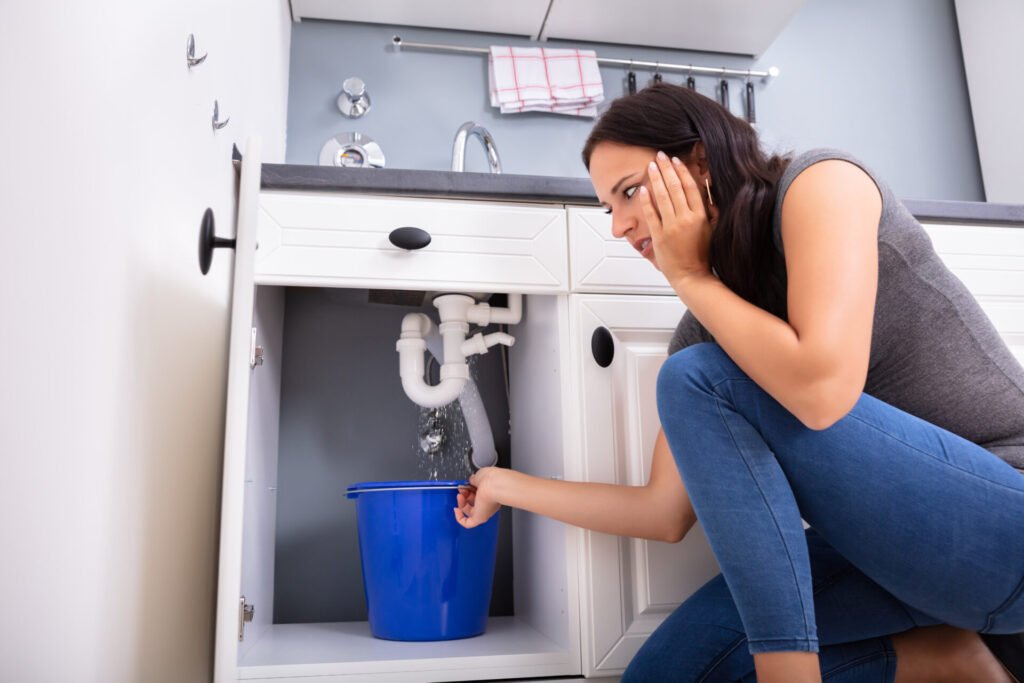
4 Bad Habits That Slowly Destroy Your Pipes
Pipes rarely fail out of nowhere. They fail because of something small you’ve been doing for years without ever thinking about it.
Everyday Habit | What Actually Happens Inside | The Real Cost Later |
Flushing wipes and pouring fat | Wipes catch on pipe seams, fat cools into solid grease | Sewage backing up indoors, lawn dug open |
Ignoring slow drains | Minerals narrow the line, trapped damp feeds mold | Rotted subfloor and split pipe runs |
Cranking valves too tight | Threads strip out, rubber seals crush flat | Sudden blowouts under full pressure |
Using drop-in tank tablets | Bleach eats flappers and fill valve seals | Water bills climbing $100 or more |
1. Treating Drains Like Garbage Cans
Ignore the word flushable on the package. Baby wipes, paper towels, and cotton rounds hold together in water. Toilet paper is built to fall apart. That one difference is why wipes snag on a joint and build a mat halfway down your sewer lateral.
Kitchens are worse. Hot bacon grease pours like water and cools like candle wax, coating the pipe a little thicker every Sunday. Celery strings, corn husks, and potato peels belong in the bin, not your garbage disposal.
2. Turning a Blind Eye to Small Leaks
That damp ring under the bathroom vanity is not going to dry out on its own. It soaks into particleboard, swells the cabinet base, and feeds mold inside the wall cavity long before anything shows up on the paint.
Keep an eye on your pressure as well. If the shower suddenly feels weak for no reason at all, you may be dealing with a pinhole leak under the slab or somewhere out in the yard.
3. Over-Tightening Every Fitting
A drip almost never means the joint is too loose. Muscling it tighter deforms the washer, strips brass threads, and cracks plastic supply fittings, which turns a slow drip into a fast one.
Same story with those blue tablets people drop in the toilet tank. Concentrated bleach sitting in still water chews through the rubber flapper, and then you’ve got a toilet running all night on your water bill.
4. Risky DIY Fixes
Swapping a worn faucet washer is a fine Saturday project. Opening up a gas water heater or sweating copper for the first time is a different thing entirely.
The failure modes are just harsher. A gas leak, a shorted circuit, a joint that lets go while you’re at work. If a plunger and half an hour haven’t moved it, that’s the moment to bring in a pro, and it still costs less than repairing a DIY attempt that went sideways.
Understanding How Your Home’s Plumbing Actually Works
Here’s the part most homeowners never get told. Your house runs two completely separate plumbing systems, and they fail in completely different ways.
Knowing which one is acting up tells you how fast you need to move.
The Fresh Water Supply System
Clean water arrives under pressure, either from the city meter or a well pump. Every joint in that network is sealed tight, because pressure is what pushes water up to your second-floor shower.
Pressure is also why supply leaks are so brutal. A failed line doesn’t drip politely. It sprays, and it can put an inch of water across a room while you’re out picking up groceries.
The Wastewater Drain System
Drain lines have no pressure behind them at all. Gravity does the whole job, pulling waste out toward the city main or your septic tank.
Which is exactly why slope matters. Let a line sag, settle, or glaze over with grease and water stops moving. It backs up and shows up again at the lowest fixture in the house, usually a ground-floor shower or toilet.
When to Call a Plumber Immediately
Plenty of plumbing problems can sit quietly until Monday morning. These can’t.
- Water spraying or actively flooding: shut the main off and call. Every minute of soak time is another few feet of flooring.
- Backups in more than one fixture: if flushing the toilet makes dirty water rise in the shower, your main sewer line is blocked solid.
- Rotten egg smell near appliances: sulfur near the heater or furnace usually means gas. Get everyone outside first, then call from the sidewalk.
- A water bill that doubled for no reason: nothing changed in your routine, but the number did. Water is going somewhere under the yard or the foundation, and EPA WaterSense puts the average household’s leaks at more than 9,300 gallons a year.
- Rusty or discolored tap water: brown or yellow water points to corroding pipe or heavy sediment sitting in the heater tank.
- Banging inside the walls: that thump when a valve shuts is water hammer, and it’s a pressure spike hitting your joints over and over.
- Frozen or frosted pipes: standing water in an uninsulated line turns to ice, ice expands, and the pipe often splits open right as things thaw. The Red Cross has a solid guide on thawing one without making it worse.
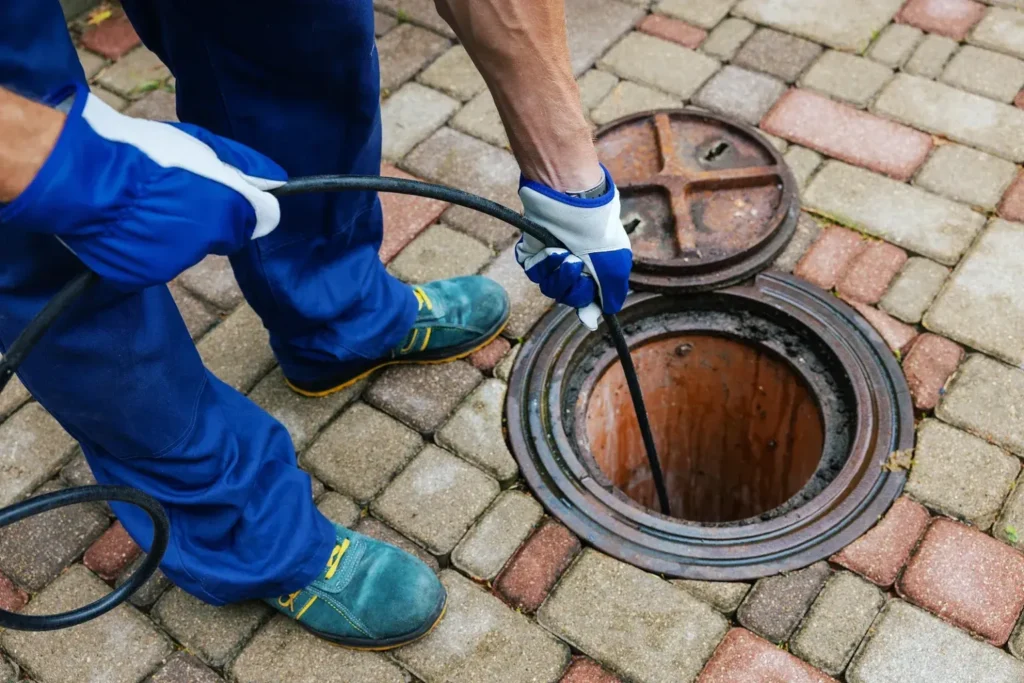
How Plumbers Clear Deep, Stubborn Drain Clogs
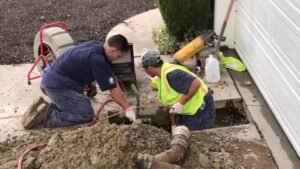
When a plunger and a bottle of something haven’t touched it, the clog sits deeper than the fixture. That’s where truck-mounted gear comes in, and none of it means opening a wall.
High-Definition Sewer Camera Inspections
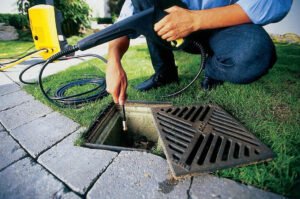
Rather than guess where the trouble is, a plumber feeds a small color camera on a flexible rod down your cleanout.
You watch it live on a monitor. Roots pushing through a joint, a crushed section of pipe, or twenty years of grease buildup, you see what it is and exactly how far down it sits.
Mechanical Drain Snaking
A motorized drain snake runs a steel cable down the line with a cutting head on the end. As the cable spins, those blades chew through hair, paper buildup, and thin root growth until flow comes back.
It’s the right tool for a blockage in one spot. It’s not the right tool for a pipe that’s coated end to end.
Hydro-Jetting High-Pressure Washing
For heavy grease, sand, or mineral scale, plumbers use hydro-jetting. A nozzle fires water backward at very high pressure, scouring the pipe wall as it pulls itself along the line.
The difference is easy to see on camera. Snaking punches a hole through the blockage. Jetting takes the pipe back to bare wall.
Simple Preventative Steps You Can Take Today
None of this needs a license. Twice a year, maybe half an hour total, and you’ll catch most of what turns into a 2 a.m. phone call.
- Check appliance supply hoses: look behind the washer, the toilets, and the fridge ice maker. Any cracking, rust, or bulging in the braided line means replace it now, not later.
- Exercise your main shut-off valve: close it and reopen it once a year. Valves that never move are the ones that seize the night you actually need them.
- Flush the water heater tank: drain a few buckets off the bottom valve every six months to clear sediment. The heater runs quieter and lasts noticeably longer.
- Check your water pressure: a screw-on gauge costs about ten dollars at the hardware store. Healthy is 40 to 60 PSI. Anything above 80 is quietly wearing out every appliance you own.
Local Plumbing Services in Sacramento, CA
Sacramento houses come with their own particular headaches. Older homes around Midtown and East Sacramento still run original galvanized iron, which rusts shut from the inside where nobody can see it.
Head over to Land Park or Curtis Park and the problem changes. Big shade trees, old clay sewer laterals, and roots that find every joint looking for moisture.
Add Central Valley summers that push water heaters hard for months on end, and you want someone who has already worked on houses like yours.
Why Sacramento Homeowners Turn to Us
- 24/7 rapid response: quick dispatch across Sacramento, Elk Grove, Roseville, Folsom, and Rancho Cordova.
- No hidden fees: flat-rate pricing you approve before any work starts, so the final bill matches the quote.
- Modern diagnostic tools: high-definition sewer cameras and leak detectors that find the trouble spot without digging up your yard first.
- Full-service repairs: everything from a quick drain clearing to water heater replacement and trenchless sewer line work.
When to Call a Plumber: Questions Homeowners Ask
Is a slow drain reason enough to call a plumber?
One slow fixture usually is not. Pull the stopper, clear the hair out of the tailpiece, and flush it with hot water. When every drain in the house slows down at the same time, that is the moment to call a plumber, because the blockage sits in the main line rather than under a single sink.
Should I call a plumber for a toilet that keeps running?
Check the flapper first, since a warped flapper is behind most of them and it is a five-minute swap. If the tank still refills on its own after that, or if you hear water running with every valve closed, call a plumber before the meter keeps spinning all month.
How do I know when to call a plumber instead of trying a DIY fix?
The line is soldering, gas, sewer, and anything behind a wall. Swapping a supply line or a flapper is homeowner work. Once a repair involves heat, gas, the main line, or opening drywall, call a plumber and skip the experiment.
Is it worth calling at night, or should I wait until morning?
Water that is actively spreading does not wait. A burst supply line, sewage backing into a tub, or a water heater venting gas are all reasons to call a plumber immediately, whatever the hour. A dripping faucet can absolutely wait until morning.
What should I have ready when I call a plumber?
Know where your main shutoff is and whether you already closed it, which fixtures are affected, when it started, and whether anything was poured down the drain recently. Those four answers let the plumber load the right tools before leaving the shop.
Need Help With a Plumbing Issue in Sacramento?
The drip you ignore today is the floor you replace in spring. If something in your house is leaking, backing up, or making a noise it never used to make, get eyes on it while it’s still small.
Not sure when to call a plumber for what you’re seeing? Reach out to our Sacramento team for a straight diagnostic visit, or immediate emergency service if it really can’t wait until morning.